WRITING / ARCHIVE
Risk is Personal, but Also a Privilege
Everyone wants higher returns. But not everyone should take the same risks.
Some investors dive headfirst into crypto, startups, or stocks. Others hold land, treasury bonds, or savings accounts. What drives these differences? It’s more than knowledge or product access.
Risk is personal. But it is also a privilege.
We often confuse our willingness to take risk with our ability to absorb loss. In Uganda and across much of Africa, this misalignment is why many portfolios underperform, why panic selling happens, and why seemingly bold investors often stall.
This article translates the thesis and purpose for this substack Risk is a Privilege into a practical framework for understanding risk tolerance, rooted in both psychology and real-life constraints.
Understanding Risk Tolerance
Willingness to Take Risk
This is your emotional comfort level with volatility or losing money. It's how you feel when your portfolio or an investment drops 20%.
Ability to Take Risk
This is your actual financial capacity to take losses without derailing your life. It depends on income stability, assets, liabilities, and time horizon.
You might feel bold. But can your life actually absorb the impact?
That’s where the danger lies. Many of us are taught to chase returns before building resilience.
What the Numbers Show
I recently asked some of you to complete a Risk Return Profiler to determine how you assess your own investing risk, both in terms of how you feel about taking risk, and how well your financial situation supports it. The results provided a revealing snapshot of how emotions and reality often diverge in personal finance, particularly across different professions, income levels, and life stages.
Distribution of Risk Profiles
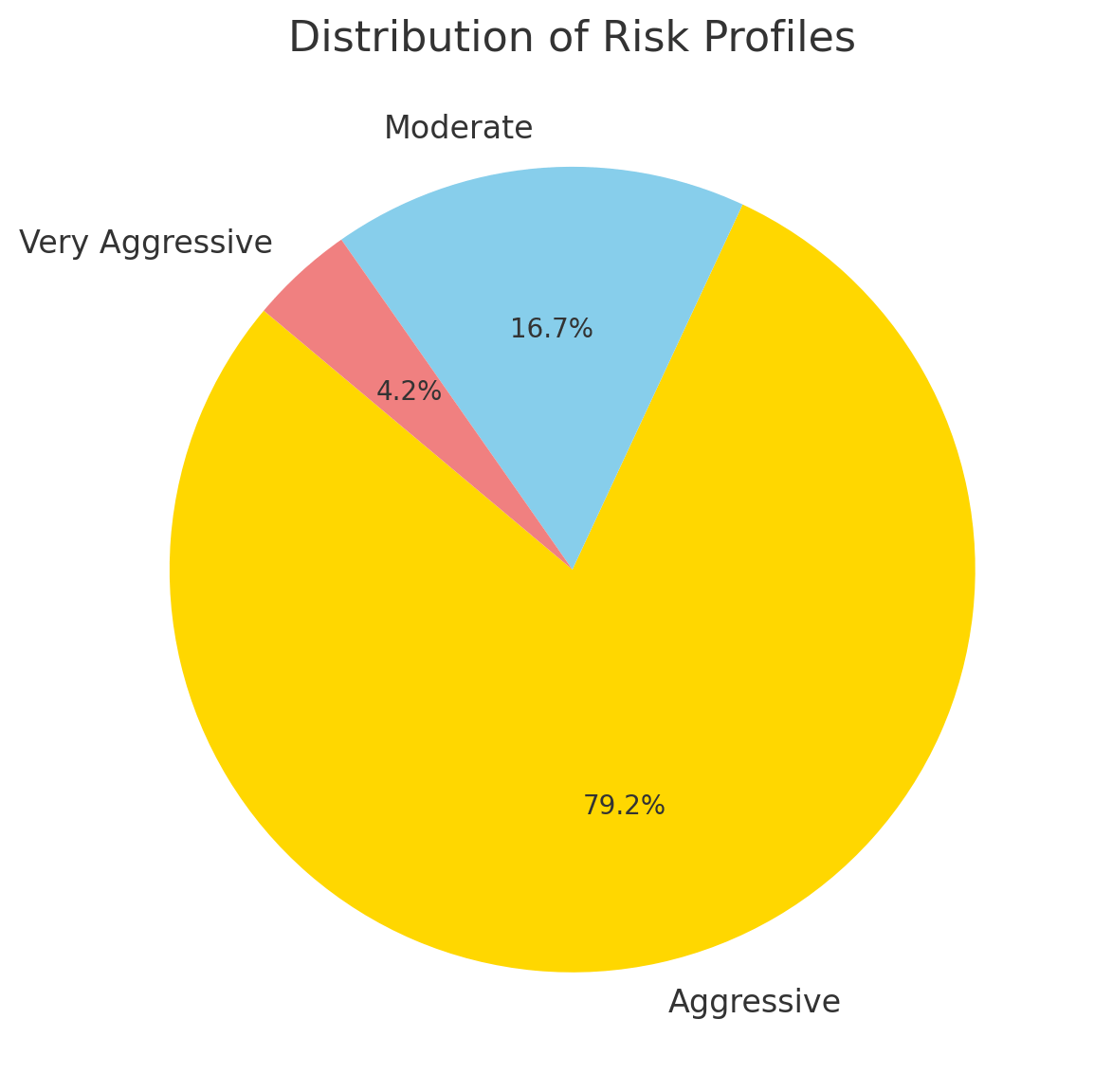
79% of respondents identified as "Aggressive."
None of the respondents viewed themselves as “Conservative”
Yet many of these same investors want to withdraw funds in 1–3 years or have limited buffers.
People feel aggressive, but may not be positioned to survive aggressive risk.
Time Horizon vs Risk Profile
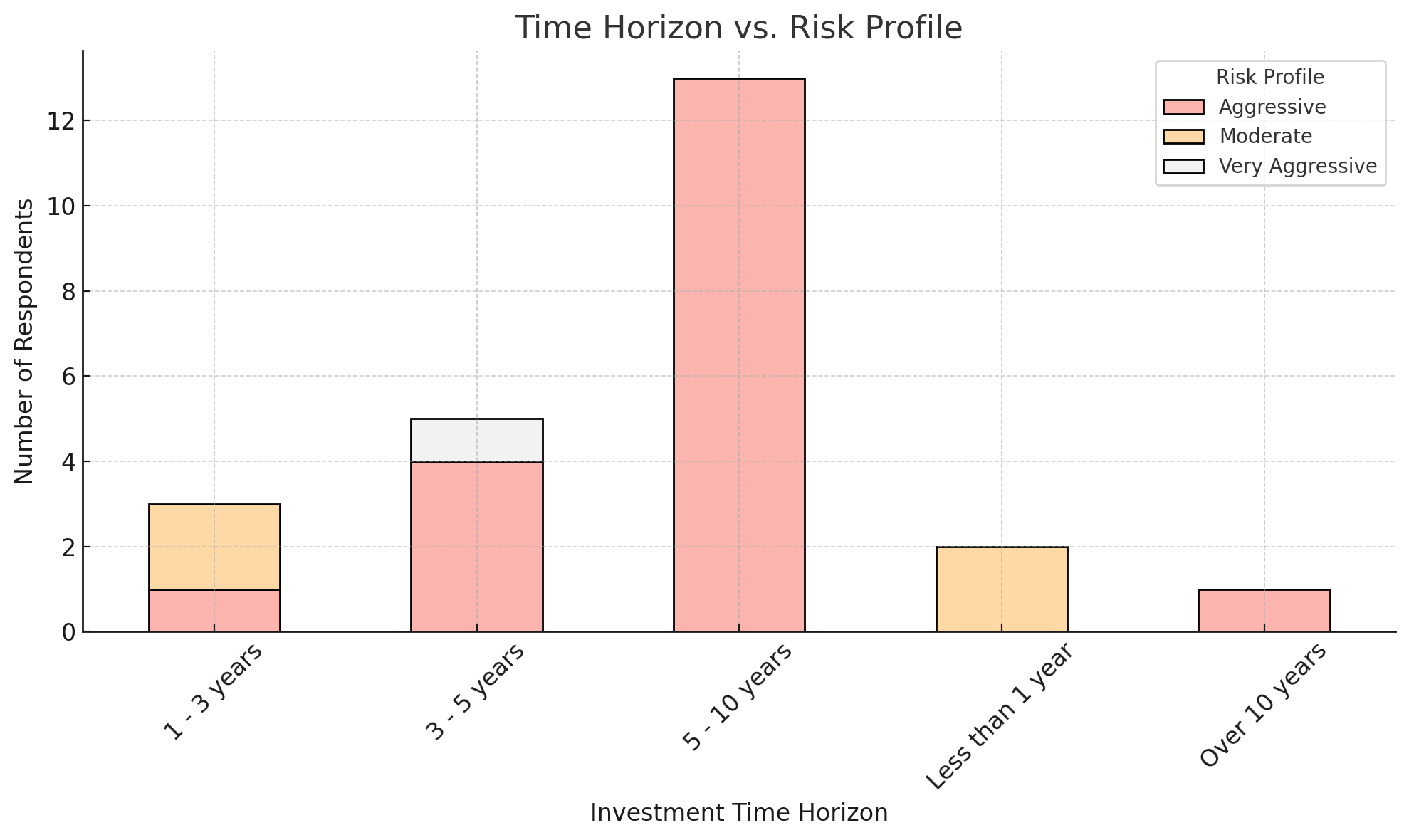
Many Aggressive investors have short time horizons.
A visual misalignment between expected withdrawal timing and declared risk appetite.
Age vs Risk Profile
In general, research shows that risk tolerance tends to decrease with age. This is largely due to a shorter investment horizon and a growing need for capital preservation over capital growth. Younger investors are typically more risk-tolerant, often favoring growth-oriented assets like equities and alternative investments. Older investors, especially those approaching retirement, tend to shift toward more conservative portfolios to protect their accumulated wealth.
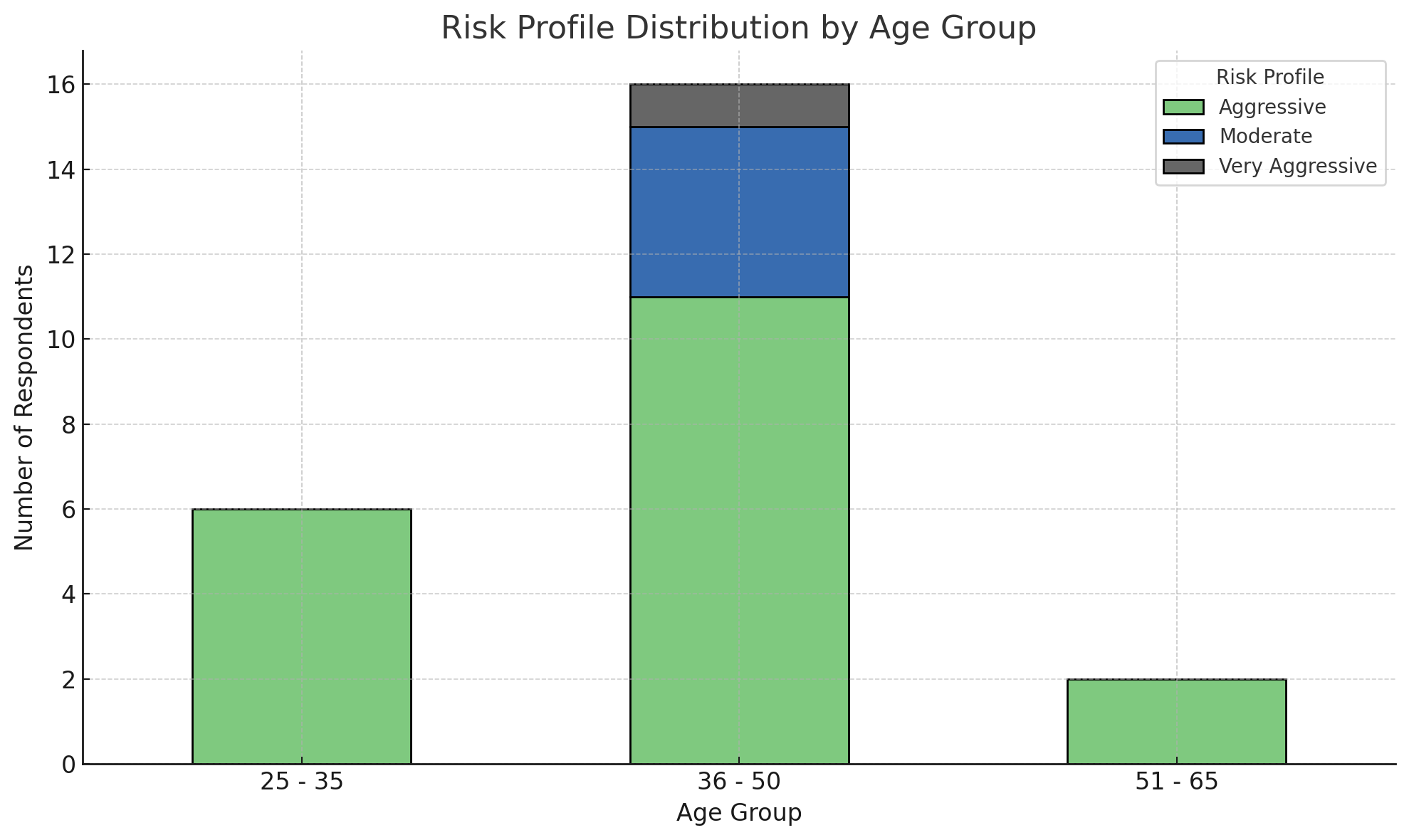
However, as the data shows, this trend isn't always followed in practice. I observed a significant number of older respondents identifying as "Aggressive" investors, this underscores the importance of regularly reassessing one’s risk profile - not just by age, but also by current financial goals, responsibilities, and context.
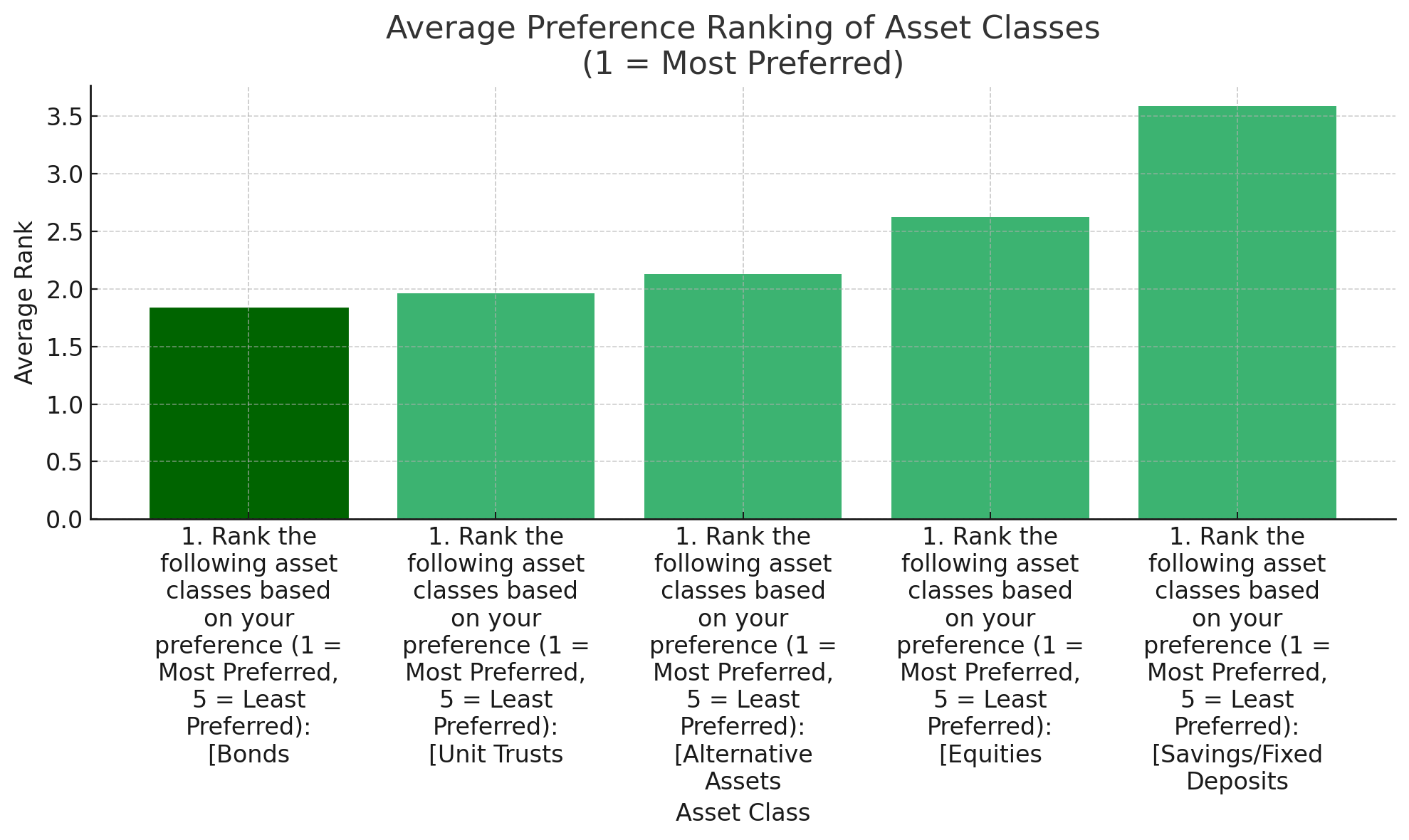
Preferred Asset Classes
As a primer and for an appreciation and understanding of the different asset classes, I have previously written an article on Unit Trusts, NSSF, Bonds, Equities, and Alternatives: Where Should Ugandan Investors Put Their Money.
The data showed that:
Savings and bonds still dominate preference lists.
Despite high-risk attitudes, few investors choose alternative assets.
Preferred Asset Classes by Risk Profile
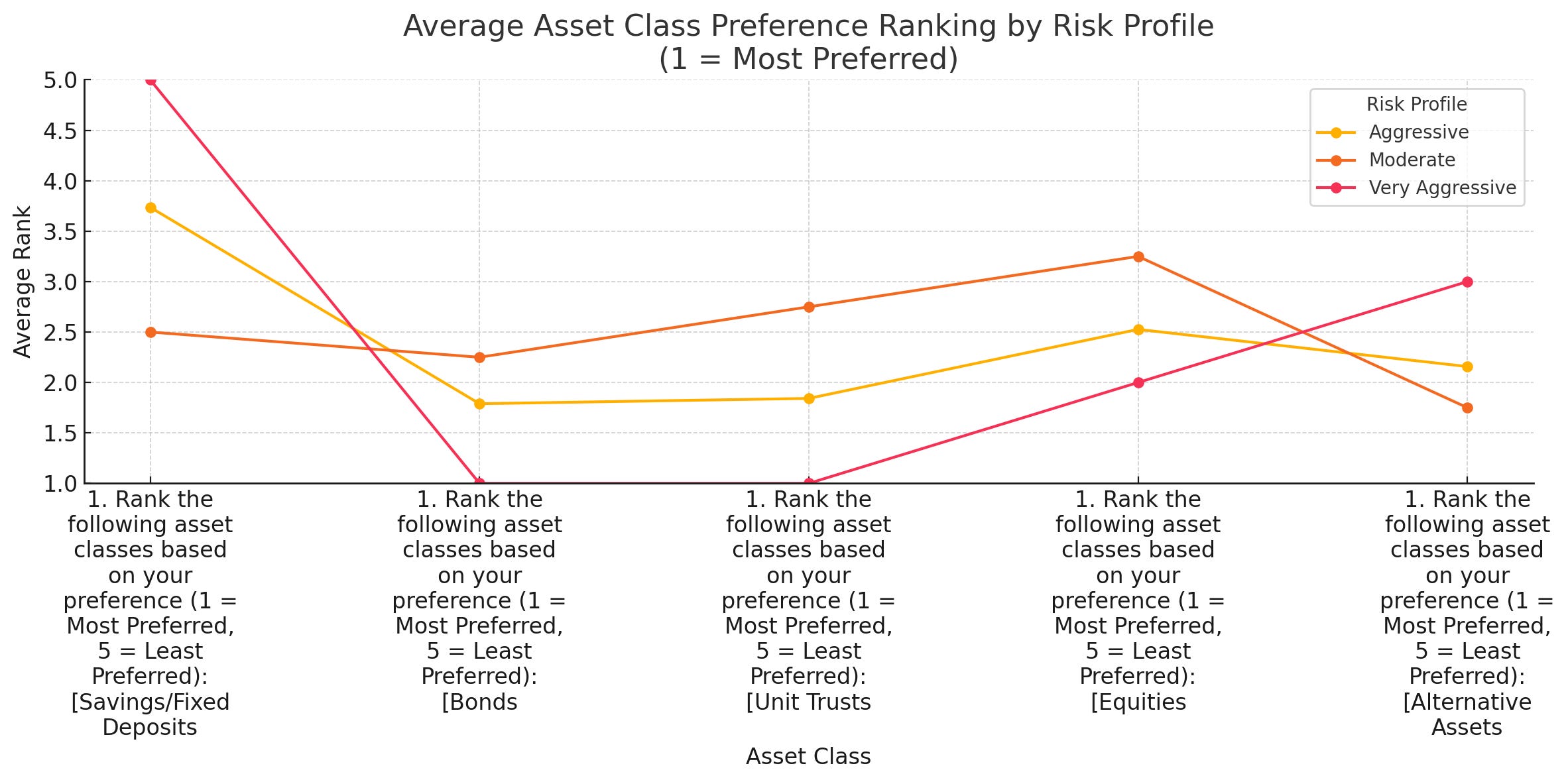
A deeper analysis shows that:
Aggressive investors favor Equities and Alternative Assets far more than Moderates.
Moderate investors consistently ranked Savings and Bonds as top choices.
Unit Trusts fall in the middle ground, suggesting suitability for both types of investors.
Alternative Assets, even among Aggressives, are not top-ranked, perhaps due to lack of access or understanding.
Across all profiles, Savings remain one of the most preferred, reflecting a cultural emphasis on liquidity and capital protection.
These findings underscore a mismatch that’s both common and dangerous in personal finance:
We often want more return than our lives can safely handle.
This mismatch, is seen across real-life situations: boda boda riders and informal traders risking savings in forex or crypto schemes; young professionals investing in volatile markets without emergency funds; communities losing SACCO savings to speculative ventures; retirees shifting pensions into risky investments; and individuals over-leveraging to buy land or property. In all cases, the emotional drive to grow wealth outpaces financial readiness, exposing people to loss they can’t absorb.
A Better Way to Think About Risk
To bridge this gap, I use a Risk Tolerance Matrix that plots Willingness vs. Ability to Take Risk
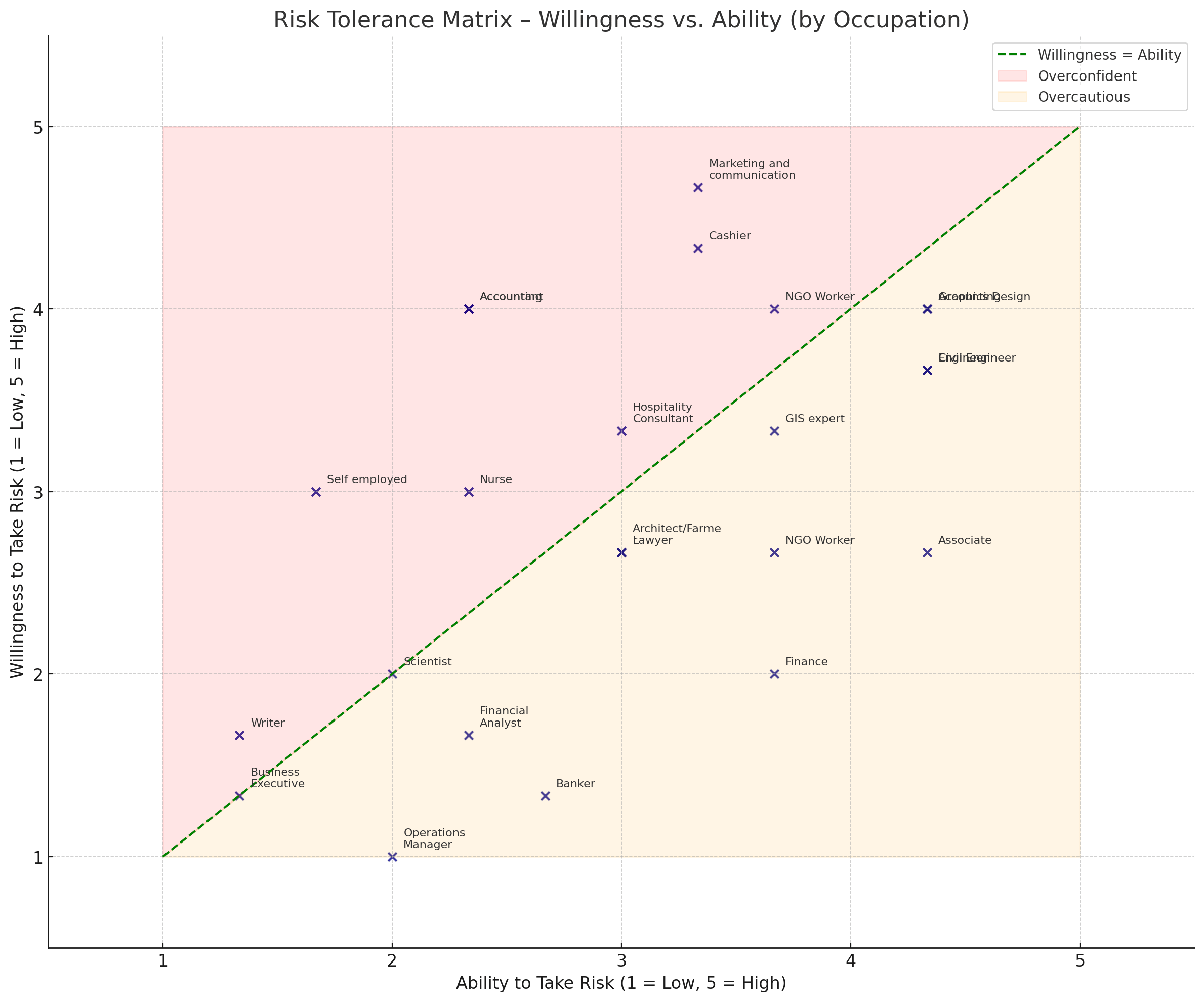
Using the data from the profiler, this matrix reveals how real individuals across professions relate to risk. The upper red zone highlights those whose willingness to take risk exceeds their financial readiness - often gig workers or students. The lower orange zone shows the overcautious - individuals with capacity but lacking confidence, like civil servants or older professionals. The green line is the ideal: those with emotional and financial alignment. Use this figure to reflect on where you are—and where you need to be.
You can only take risk sustainably when your willingness and ability align, below an example investor positioning by ability willingness to take risk:
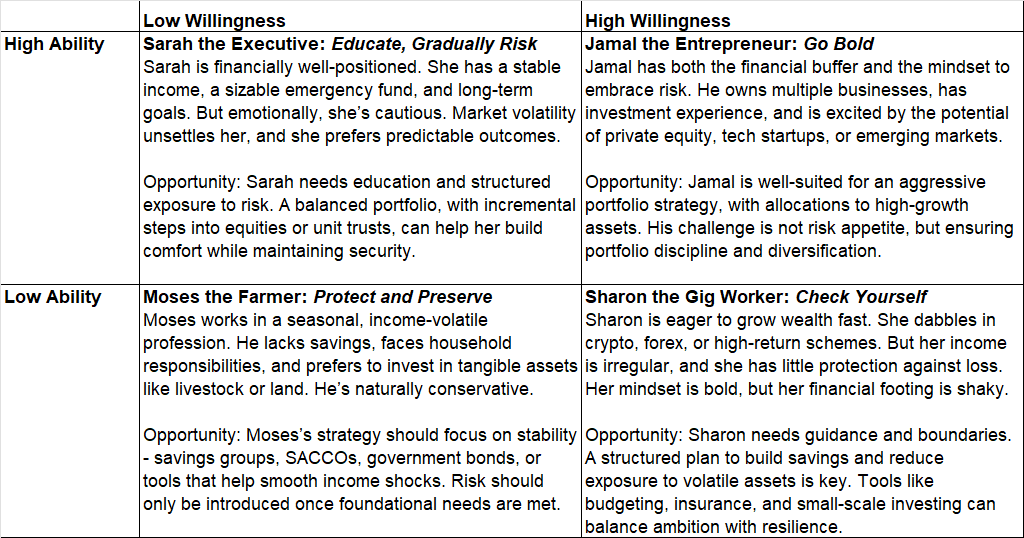
The top-right quadrant represents aligned, confident investors like Jamal the Entrepreneur. Bottom-left reflects conservative, low-capacity individuals like Moses the Farmer. The figure illustrates the importance of matching financial capacity with emotional readiness.
Why This Matters in Uganda & Africa
In most African markets:
Income is volatile and unemployment is high (gig work, informal sector) - characterized by irregular income and limited job security.
Inflation is real - diminishing the real returns on low-risk investments like savings accounts and government bonds, erode purchasing power which can deter long-term savings.
Safety nets are weak (no unemployment benefits, weak health insurance) - In most cases, these benefits are restricted to formal sector workers, leaving the majority without a financial safety net during periods of unemployment or illness.
Investment Products are limited (few accessible diversified options) - Uganda’s limited investment landscape offers few options beyond land, SACCOs, and government bonds. With ETFs, REITs, and private equity largely inaccessible, and financial literacy still low, many investors face inflation risk, lack diversification, and are vulnerable to scams posing as legitimate opportunities (D9 Club, TelexFree, OneCoin and Mirror Trading International).
So when someone says they are ready to take on high risk, I now ask: “If this investment went to zero, would your life be fine?” If the answer is no, you’re not ready, regardless of your mindset.
How to Align Your Risk
So, if you’ve realized your risk appetite doesn’t quite match your financial footing, here’s how to bring the two into alignment, one step at a time.
Check your cushions: Emergency fund, health insurance, life insurance, stable income? That is your “ability.”
Understand your timeline: for example, don’t invest in volatile assets if you need the cash next year.
Start slow, build confidence: Use treasury bonds, unit trusts, and SACCOs to grow into risk.
Let your investments mature with you: You don’t need to go from 0 to crypto overnight. Mental note to write about crypto another day!
Final Thought
Risk is not something we “have.” It’s something we earn the right to take through preparation, structure, and experience. When we ignore this, we confuse bravery with recklessness. But, when we embrace it, we realize that true financial freedom is not the ability to take risk. It’s the ability to survive it.
So if you feel aggressive, ask yourself, Can I afford to be? And if you're afraid, remember you can build up to it, one wise choice at a time.
Want to Know Your Risk Profile?
Complete the profiler here. You will get a personalized risk profile with actionable suggestions to guide your investment decisions.
Disclaimer: This article is for informational purposes only and does not constitute financial advice. Please consult your financial advisor before making any investment decisions.